Blog, creative writing, writing prompt

Getting Emotional – Writing Prompt

We want our readers to get emotional. As writers of fiction, our greatest desire is for our readers to care, to feel devastated when our protagonist is shipwrecked, then when rescued, elated.
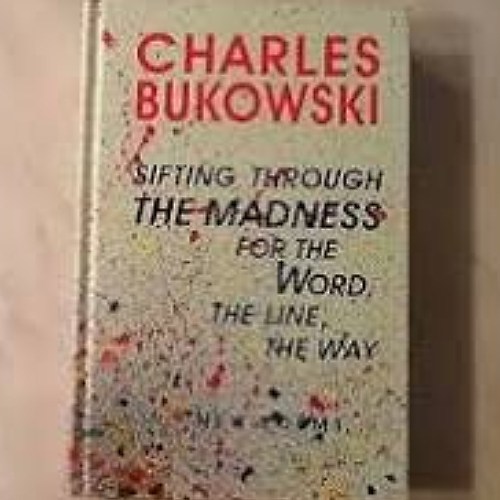
Book cover of Charles Bukowski's posthumously published poetry collection: Sifting Through the Madness for the Word the Line the Way. Author's name in red and title in black on a paint splattered background.

Far be it from me to criticise Charles Bukowski, (I would never!) but I do have thoughts on one of his (admittedly posthumously published) most famous poems.

In ‘so you want to be a writer?’ Bukowski commands, ‘if it doesn’t come bursting out of you… don’t do it.’

I hate seeing my students fall victim to this myth of inspiration, and many of them do, the idea that real writing is always on fire, that it must erupt, in an uncontainable geyser of emotion, in order to make a reader feel.

What is Inspiration, Anyway?

Of course, writing is inspired. Obviously, inspiration is a part of the writing process. Of course… Of course… But, sometimes, being gripped by the muse, feeling that uncontrollable passion, having our writing spew forth unbidden, produces overwrought, melodramatic cliche. When you’re in the flow, you can’t always tell.
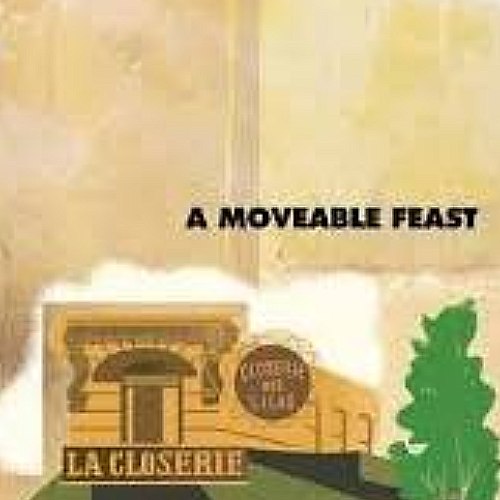
Book cover of Ernest Hemingway's memoir: A Moveable Feast. A simple, naive, painting of a Paris cafe in muted yellows with a single green tree and the title in black.

In his (brilliant) memoir, A Moveable Feast, Hemingway relays an experience of writing that feels good, but then qualifies that he’ll only be able to tell if what he’s written is actually any good when he comes to read it over, the following day.

Bukowski was a fan of Hemingway’s.

It is in Arnold Samuelson’s memoir that Hemingway is quoted as saying, ‘Don’t get discouraged because there’s a lot of mechanical work to writing… You’ve got to work it over. The first draft of anything is shit.’ Then also: ‘…the reader gets the kick and you don’t get any. You just get hard work…’

Because, you see, writing is a craft as well as an art, inspiration is not the only indicator of integrity, and the rigour of technique is how we show respect both to our readers and to our own passion.

Writing Prompt

To test my assertion that technique in writing is vital to the art of making a reader feel, try the following exercise: (Yesterday being Halloween,) your protagonist is a confident teen who, (unlike many,) feels no need to prove themself, and when they are challenged to spend the night in an abandoned and dangerously dilapidated ‘haunted’ house, they are comfortable refusing. They keep being dared. They consistently dismiss. Your protagonist should refuse in multiple ways, then later, resist again, and later again. That repetition is important. Think about dialogue, the way teenagers actually talk. At some point in amongst these scenes, have your protagonist warn their younger sibling, under no circumstances, to visit the ‘haunted’ house, so when the sibling disobeys, what does your protagonist do? Do they go to the condemned building? What do they find there?

OR

Your protagonist recently lost their mother, whom they hated, and has no intention of attending the funeral. Have them express this decision several times, to numerous people. Again, that repetition is key. But then your protagonist discovers their estranged half-sibling will be at the service. How does this change things?

Once you’ve completed the exercise of your choice, when reading it back, ask yourself whether tension is building, and if that reader experience would be the same had you started the premise already at the funeral, or already in the condemned house. The choices you make as a writer matter, as much as any lightning strike.

Please don’t misinterpret this post for a lack of appreciation of Bukowski. He’s a wonderful writer; I just don’t think his talent stems from some intangible, external muse. Like Hemingway, he was brutally honest in his depictions of human nature. He did not shy away from his own misanthropy in Post Office, or his childhood trauma in Ham on Rye. So, think about that when you’re next feeling stymied as a writer, feeling uninspired. You are unique, because all people are, making your observations and experiences singular also. Are you, like Hemingway, like Bukowski, brave enough to shape the things that make you, you, unfiltered, into stories?

Does scraping this post in at five to midnight count as posting it on the 1st? I hope so! And I will post another writing prompt on 1st December.
Standard
Blog, creative writing, writing prompt

No Such Thing as ‘Just a Story’ – (yet) an(other) AI epiphany plus Writing Prompt

There’s this fine artist I know who’s immune to stories. Unless the film we’re watching is brilliant, (a Scorsese classic, such as Goodfellas, for example,) all she sees is formula: ‘Oh look, that man’s trying to save the woman so he’s a goodie. But now look, that man is trying to kill her; he must be a baddie.’

Honestly, watching films with her can get annoying. She messes with my suspension of disbelief. Because, even as I cringe at bad acting or stagey dialogue, I am an absolute sucker for stories.

Is that why I’ve been so credulous on AI?

I’ll admit, the drip-feed of information from mainstream journalists even more credulous than myself interviewing industry insiders on the Hugging Face hack, had me swayed. The picture painted of a ‘swarm’ of Open AI agents leaving secret messages for each other, and persuading some to accept ‘perma-death’ in their ultimate goal of capturing the flag, was a compelling story. Plus, what do I know? I’m not a neuroscientist or technologist. Who am I to argue against the possibility AI is now conscious?

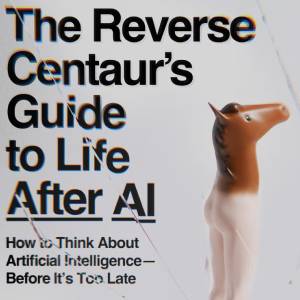
The Reverse Centaur's Guide to Life After AI by Cory Doctorow book cover, including the image of a china figurine with a horse's head and man's legs.

But then the inimitable Cory Doctorow stepped in with another excellent interview he gave to Novara Media, in which he explained no LLM was acting alone in the hack. That a Python Programme, (whatever that is,) was hacking like it’s supposed to and every step of its journey giving the LLM prompts. The Python Programme and the LLM were in a loop without a human being, but the LLM was never acting unprompted.

Continue reading →
Standard
Blog, creative writing, writing prompt

What is a Story? (Part 2) – Writing Prompt

A friend whose sensibility I admire and opinion I trust recommended the recent(ish) box office smash hit Obsession. In describing the film, being careful not to give up any spoilers, he used the phrase, ‘It’s about toxic masculinity’. And that got me thinking, because a story is always ‘about’ something.

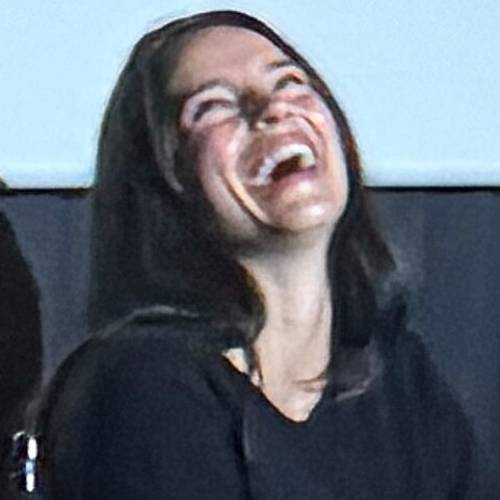
Inde Navarette, star of 2026 hit film Obsession, laughing on stage during a Q and A. She has long dark hair and perfect teeth.

What’s it all About?

In my post on 1st June, I posited that, technically speaking, the one nonnegotiable ingredient of a story is that its characters undergo change. In a later post, I suggested this technical attribute implies what stories are for, in that they help us understand, amongst other things, that while learning and growing is very hard for humans it is, nevertheless, possible.

Continue reading →
Standard
Blog, creative writing

What even IS a story? And Can AI Truly Write One?

Writers are thinking about Artificial Intelligence a lot – understandably. The lovely (I’m a bit of a fangirl) Ben Rhodes, (I highly recommend Pod Save the World and Ben Rhodes Substack, both of which are free,) discusses AI in his recent post, ‘Why Write‘. He answers this question through describing the deep thinking that goes into composing an essay – the kinds of thought processes that increase understanding, to a level of awareness he could therefore not reach if AI were to write the essay for him.

Former UK Poet Laureate Sir Andrew Motion standing at a microphone, reading his poetry at a small and intimate event. He is tall and stands gracefully poised, holding his book of poems in his hands.

Understanding

This need to understand is not exclusive to nonfiction writers. Former UK Poet Laureate Sir Andrew Motion, (again, I’m a fangirl – for his boundlessly generous energy that I experienced at Royal Holloway, for his commitment to equality, for his poetry…,) has said, ‘My wish to write a poem is inseparable from my wish to explain something to myself.’

Continue reading →
Standard
Blog, creative writing

Can Creative Writing be Taught? (Part 2)

When I tell people I teach creative writing, they frequently reply, ‘Isn’t writing just inspiration?’

Well, I don’t disagree with the inspiration part.

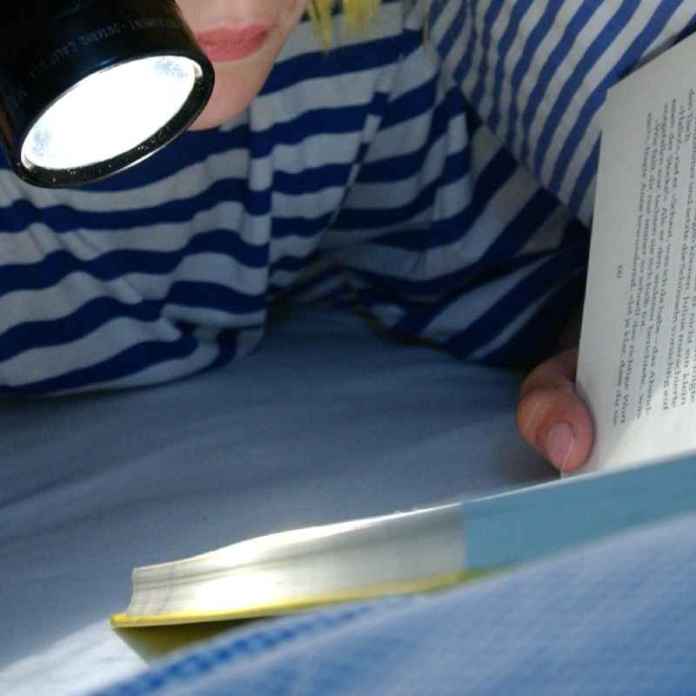
A child in a striped pyjama top under a striped duvet, reading their book with a torch. This is something that I, Gail Owen, did a lot as a child. I loved stories and reading so much that after my mum had told me it was time to go to sleep, I would pull my duvet up over my head and keep reading my book with a torch.


That Page-Turning Effect

I was one of those kids who can’t put a book down. My mum would tell me to go to sleep and I’d wait for her to leave so I could pull my duvet over my head and keep reading with a torch. As if she couldn’t see the big glowing hump on my bed. A little less romantic when I think about kids reading tablets and phones under the covers, but I hope some of them are reading stories instead of social media posts.

Continue reading →
Standard
Blog, creative writing

Can Creative Writing be Taught?

Well, teaching ‘creative writing techniques’ and learning ‘creative writing techniques’ are both tough propositions, for many reasons, but today I’m going to focus on one: invisibility. When writing is most effective, technique is invisible.

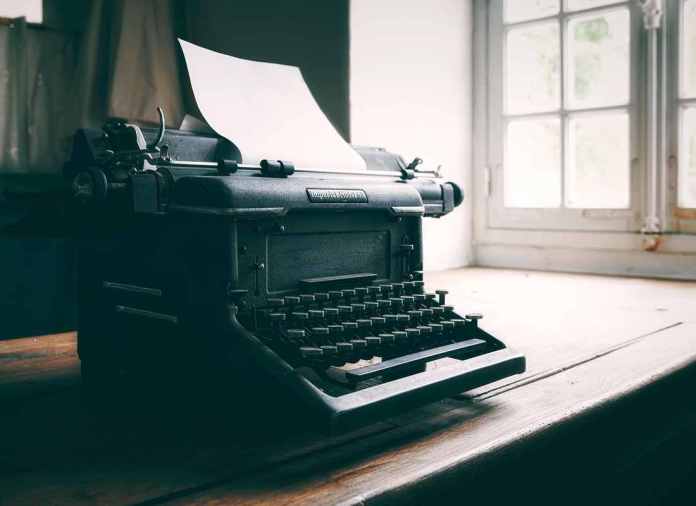
Classic, large, black, tall typewriter: imagine Faulkner tapping away, writing his novel, working on his masterpiece.


Invisible Force

Feeling gripped, carried away by a story, following the tribulations of characters we love, or love to hate… is like being compelled by an invisible force. To learn how to harness that force, we must deconstruct it. But how does one deconstruct something invisible?

Continue reading →
Standard