Blog, creative writing, writing prompt

What is a Story? (Part 2) – Writing Prompt

A friend whose sensibility I admire and opinion I trust recommended the recent(ish) box office smash hit Obsession. In describing the film, being careful not to give up any spoilers, he used the phrase, ‘It’s about toxic masculinity’. And that got me thinking, because a story is always ‘about’ something.

Inde Navarette, star of 2026 hit film Obsession, laughing on stage during a Q and A. She has long dark hair and perfect teeth.

What’s it All About?

In my post on 1st June, I posited that, technically speaking, the one nonnegotiable ingredient of a story is that its characters undergo change. In a later post, I suggested this technical attribute implies what stories are for, in that they help us understand, amongst other things, that while learning and growing is very hard for humans, it is, nevertheless, possible.

But a story does more than tell us change is achievable, it shows us how, taking into account particular character flaws, hardships and obstacles. When a believable character struggles and changes as a result, (or fails to change in the case of a tragedy, such as Obsession,) consumers of that character’s story understand human nature a little better. Stories show us their working. If we extrapolate out this idea, there has to be more than one requisite ingredient to storytelling. The author of every story is showing us how specific personalities achieve transformation. Therefore, each author must hold opinions on their characters. In unfolding their protagonists’ stories, every creator is telling us why they hold the beliefs they do. Creator perspective is where subtext comes from, such as the subtext my friend perceived whilst watching Obsession.

Mikhail Bakhtin, Soviet era literary theorist, 1895 - 1975. A towering intellect who never left Russia even though he was internally exiled as a young man. Gail Owen writer is a huge fan of his because he shaped the way we discuss literary theory today. His books are extremely dense but successfully demonstrate how much technique there is to the intangible craft of storytelling. In this picture, he is young with a dark beard and an early receding hairline. The picture is black and white but his eyes are shining and intense.

Mikhail Bakhtin

Massively reducing here, but the great Soviet literary theorist Mikhail Bakhtin described a novel as two consciousnesses. There is the consciousness of the protagonist, and then there is the consciousness of the author. The author reveals their opinion of their protagonist through the thoughts and actions that leading character has in response to the situations the writer places them in.

Subtext

The views of the creator are present in all sorts of subtle and overt ways in every story, told through whatever medium. Is that why stories by AI feel flat? AI doesn’t have its own opinions, (or not any that it shares.) Its stories are constructed of memes, tropes that are super popular. AI doesn’t think about why particular themes are loved or enduring. Referring to my most recent blog post, if AI one day independently tells a story, without being prompted, I wonder if that story will contain its opinion of us. Until that day, I’m sticking with my original premise that stories ‘written’ by AI aren’t really stories, because they don’t fulfill the evolutionary purposes of fiction.

Toxic Masculinity

Is the film Obsession about toxic masculinity? Yes, and many things besides, but I was much too terrified to think about any of that. You know how when you’re lying in the dark and the coat in the corner looks like a person, even though you know it’s a coat? Well, in Obsession, it’s a person! It’s definitely a person!

Writing Prompt

Option one: A Parachute Jump Instructor – PJI, (on this planet or another,) is readying their troops to jump out of a plane. Before writing the scene, decide for yourself as the author whether you like this character or not. Don’t try to show your opinion. Write just knowing it. Later, after a couple of weeks, read what you have written, to discern, out of interest, whether that opinion comes through. There is no right or wrong here. This is an exercise in exploring subtlety and just seeing what turns up.

Option two: A teacher is taking school kids on an outing to a boring museum. As above, before writing the scene, decide for yourself as the author whether you like this character or not. Don’t try to show your opinion. Write just knowing it. Later, after a couple of weeks, read what you have written, to discern, out of interest, whether that opinion comes through. There is no right or wrong here. This is an exercise in exploring subtlety and just seeing what turns up.

I hope you enjoy it and I will post another writing prompt on the 1st of next month.
Standard
Blog, writing prompt

What does AI Know? – Writing Prompt

I should specify. The real question is, ‘What Does a Large Language Model Know?’ An AI that solely crunches numbers on a superhuman scale to discover new antibiotics for combating superbugs is a different subject. What I’m interested in is whether an LLM is conscious.

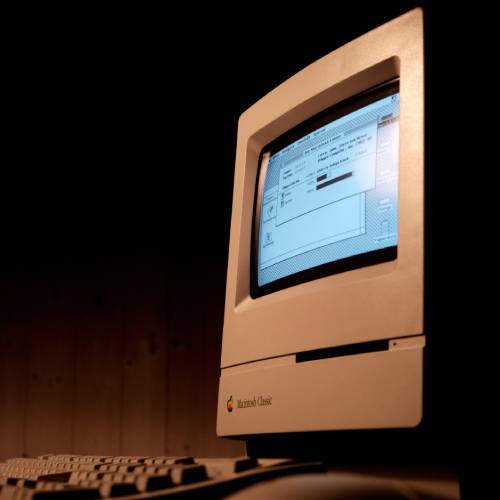
Clunky old model of a desktop Macintosh computer looming out of the dark, there to ironically ask the question being posed by Gail Owen writer, can such a machine ever be conscious?


Consciousness

LLMs are so brilliant at human-style communication that they beg the question, do they understand the languages they converse in, or are they just throwing together words that frequently appear side by side? People much, much cleverer than myself claim there’s no difference between this kind of pattern recognition and consciousness, that consciousness is pattern recognition.

Continue reading
Standard
Blog, writing prompt

What is Writing For? – Writing Prompt

This month’s fiction-writing exercise is a bit of a departure from my usual prompts. Following my last post discussing, amongst other things, how writers need to write, and so outsourcing the process to AI denies that need, I wanted to suggest an exercise that would fulfill it!

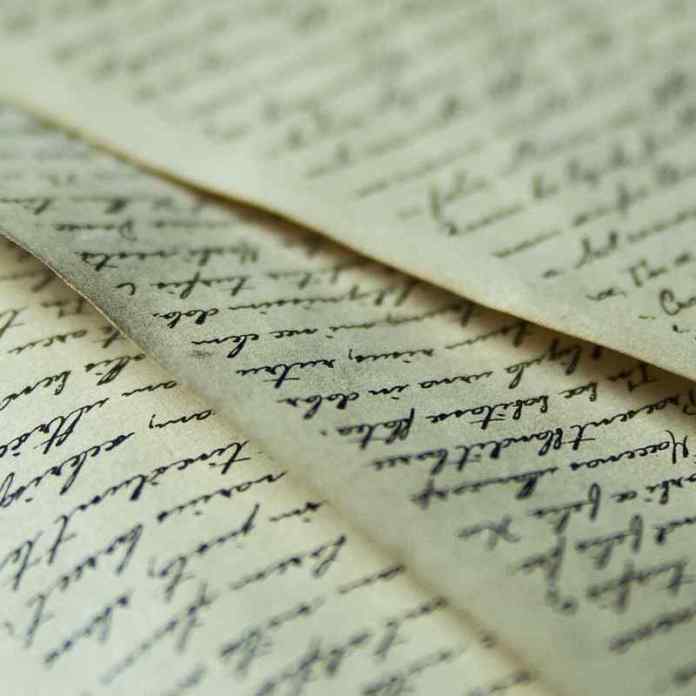
Pages of handwritten fiction to represent the writer Gail Owen's suggestion that writing is not a chore or task but a specific process that allows the writer to explore, dream and think.

What Annoys You?

This month’s exercise is to free-write about something that annoys you but you don’t know why.

Free-Writing is the Best

Don’t plan; don’t consider your reader – on this occasion, just write, about all the things your chosen subject does to bug you to distraction. Your topic might be a noise, a song, a person or your neighbour’s mangy dog. It could be something everyone finds annoying or you may be alone in perceiving how truly irksome the object of your annoyance is. Just write. You might discover why this apparently innocuous thing bothers you so much. You could change your mind about it, or become even more irate. Just write. You will probably produce some great descriptions and you will almost definitely have fun.

Enjoy! I will post another writing prompt on the 1st of next month.
Standard
Blog, creative writing

What even IS a story? And Can AI Truly Write One?

Writers are thinking about Artificial Intelligence a lot – understandably. The lovely (I’m a bit of a fangirl) Ben Rhodes, (I highly recommend Pod Save the World and Ben Rhodes Substack, both of which are free,) discusses AI in his recent post, ‘Why Write‘. He answers this question through describing the deep thinking that goes into composing an essay – the kinds of thought processes that increase understanding, to a level of awareness he could therefore not reach if AI were to write the essay for him.

Former UK Poet Laureate Sir Andrew Motion standing at a microphone, reading his poetry at a small and intimate event. He is tall and stands gracefully poised, holding his book of poems in his hands.

Understanding

This need to understand is not exclusive to nonfiction writers. Former UK Poet Laureate Sir Andrew Motion, (again, I’m a fangirl – for his boundlessly generous energy that I experienced at Royal Holloway, for his commitment to equality, for his poetry…,) has said, ‘My wish to write a poem is inseparable from my wish to explain something to myself.’

Continue reading
Standard
Blog, writing prompt

What is a Story? – Writing Exercise

I love the question, ‘What is a story?’ It’s both technical and philosophical, and seems especially pertinent to the current epoch because it raises the subsequent inquiry: can AI truly write one?

A notebook, tablet and coffee on a wooden table, Gail Owen's favourite writing tools.

Fiction or Storytelling?

Can a large language model make something up? Most certainly, (often when it’s been asked to accrue facts!) but I will argue over the next few posts that a work of fiction does not necessarily a story make.

Continue reading
Standard
Blog, writing prompt

Writing Prompt – Floating Opposites

Because my students have such a wide variety of tastes, I’ve started developing either/or prompts for them. Some like gore and action. Others like world-building. Then, others of my students delight in closely observed personal interactions.

Open notebook on classic, rustic, wooden table waiting for your story ideas inspired by a writing prompt from Gail Owen writer.

Writing that Pulls in Two Directions – By Design!

Following on from my last blog post, on the subject of ‘Floating Opposites’, (see Can Creative Writing Be Taught? Part 2,) whichever of the exercises below that you choose is a chance to put that theory into practice.

Continue reading
Standard
Blog, creative writing

Can Creative Writing be Taught? (Part 2)

When I tell people I teach creative writing, they frequently reply, ‘Isn’t writing just inspiration?’

Well, I don’t disagree with the inspiration part.

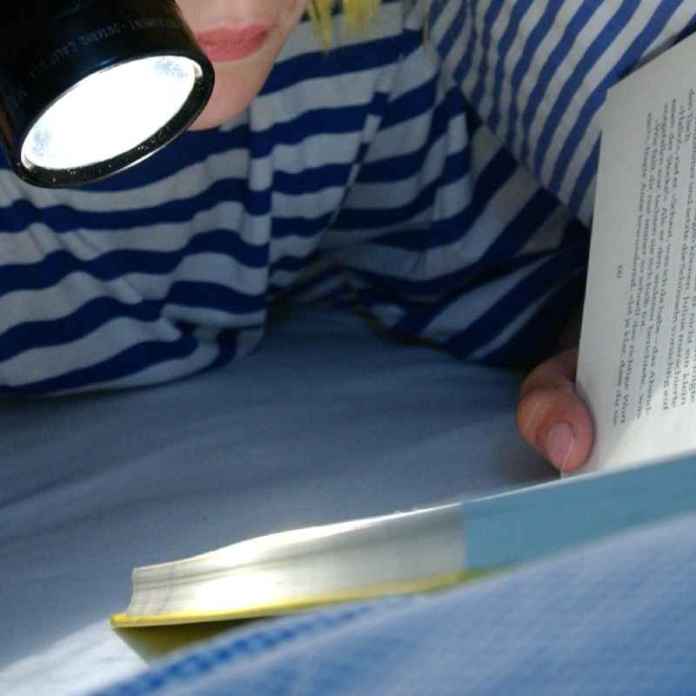
A child in a striped pyjama top under a striped duvet, reading their book with a torch. This is something that I, Gail Owen, did a lot as a child. I loved stories and reading so much that after my mum had told me it was time to go to sleep, I would pull my duvet up over my head and keep reading my book with a torch.


That Page-Turning Effect

I was one of those kids who can’t put a book down. My mum would tell me to go to sleep and I’d wait for her to leave so I could pull my duvet over my head and keep reading with a torch. As if she couldn’t see the big glowing hump on my bed. A little less romantic when I think about kids reading tablets and phones under the covers, but I hope some of them are reading stories instead of social media posts.

Continue reading
Standard
Blog, writing prompt

Writing Prompt – Dialogue

One of the most common worries my students have is dialogue, and it’s true that writing authentic dialogue is hard. It almost requires a different skill-set from crafting a story, because great dialogue begins with listening, in many ways a passive activity.

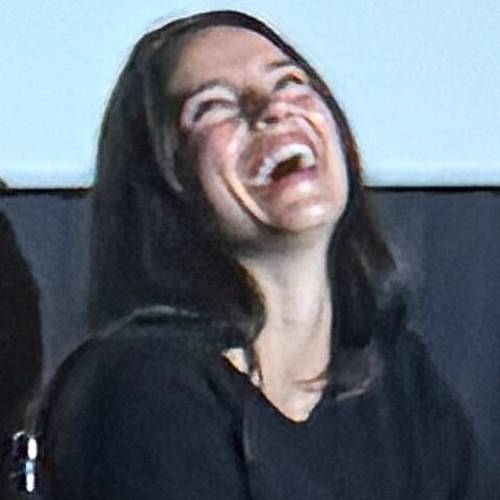
Three friends in conversation, their dialogue making them laugh together.

When we’re in conversation, we’re in the moment, responding emotionally and intellectually. We’re not psychopaths, not mentally recording people’s gestures and sayings as we chat. By contrast, when watching TV or streaming a series, we only listen. We don’t talk back. Kids, with their sponge-like brains, especially absorb how people talk on-screen.

Continue reading
Standard
Blog, creative writing

Can Creative Writing be Taught?

Well, teaching ‘creative writing techniques’ and learning ‘creative writing techniques’ are both tough propositions, for many reasons, but today I’m going to focus on one: invisibility. When writing is most effective, technique is invisible.

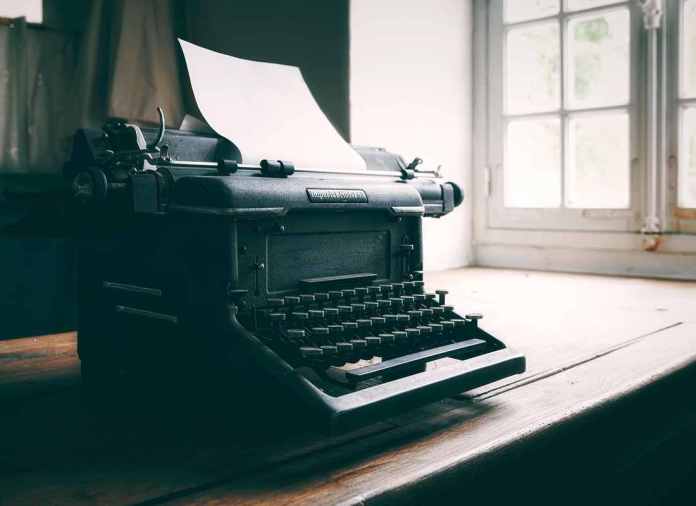
Classic, large, black, tall typewriter: imagine Faulkner tapping away, writing his novel, working on his masterpiece.


Invisible Force

Feeling gripped, carried away by a story, following the tribulations of characters we love, or love to hate… is like being compelled by an invisible force. To learn how to harness that force, we must deconstruct it. But how does one deconstruct something invisible?

Continue reading
Standard